The Challenge
Why Rosmead Street needed protecting
Rosmead Street sits in the Southcoates area of east Hull – a dense, diverse, inner-city neighbourhood where homes sit close together and green space is limited. Like much of Hull, the street was vulnerable to surface water flooding. When heavy rain fell faster than the drains could cope, water had nowhere to go.
Hull’s flat topography means surface water has very little natural gradient to flow away. With 84% of the city’s surface water flowing into combined sewers, even moderate rainfall can overwhelm the drainage system. For Rosmead Street residents, that meant the risk of floodwater entering their homes during intense rainfall events.
The street also presented an opportunity. The road surface was due for renewal, and Hull City Council’s housing team was simultaneously planning improvements to property frontages on the street. The timing was ideal for a joined-up approach that would deliver flood resilience alongside regeneration – with minimal extra disruption to residents.
The Solution
Hull’s first permeable street
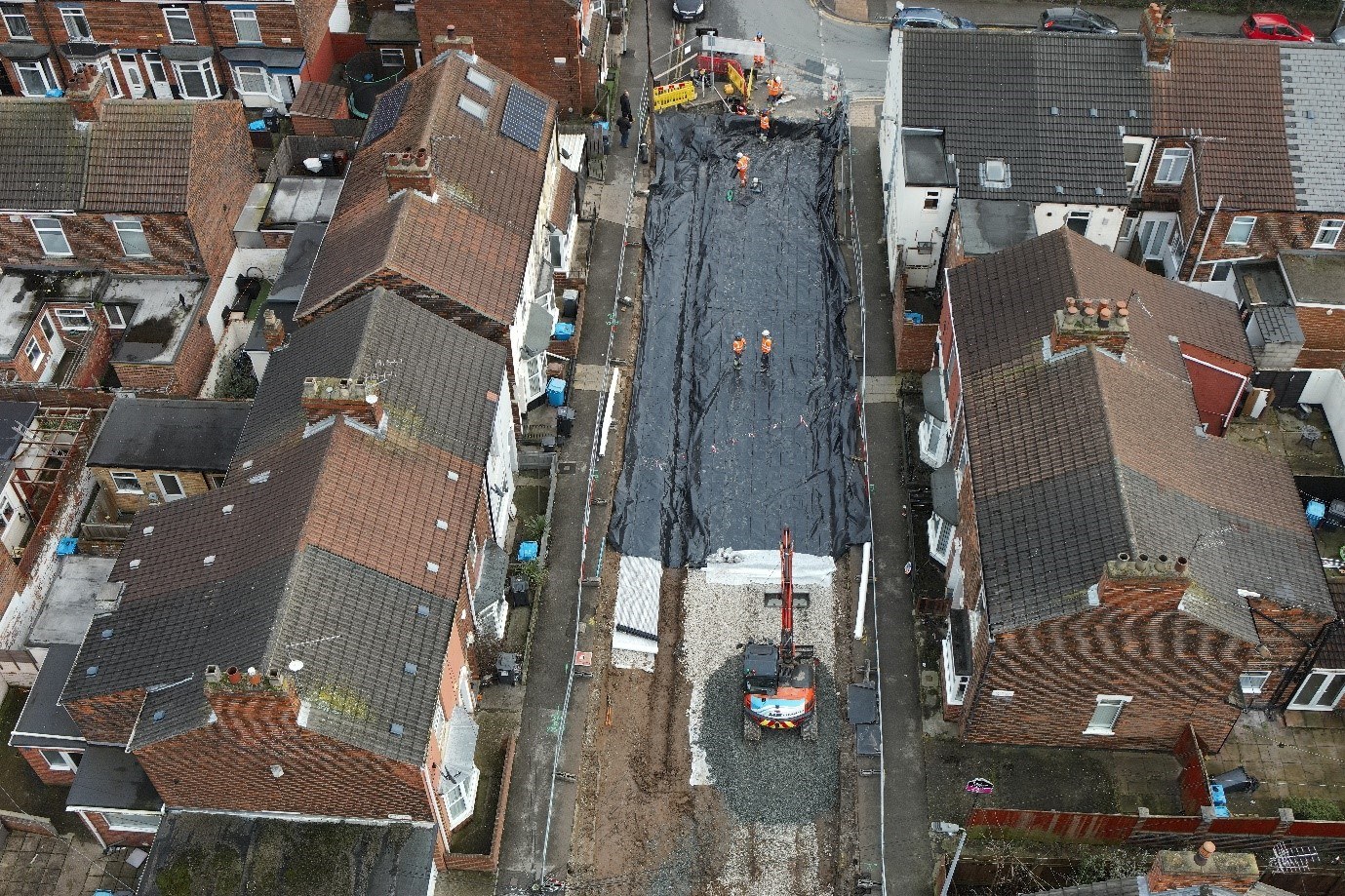
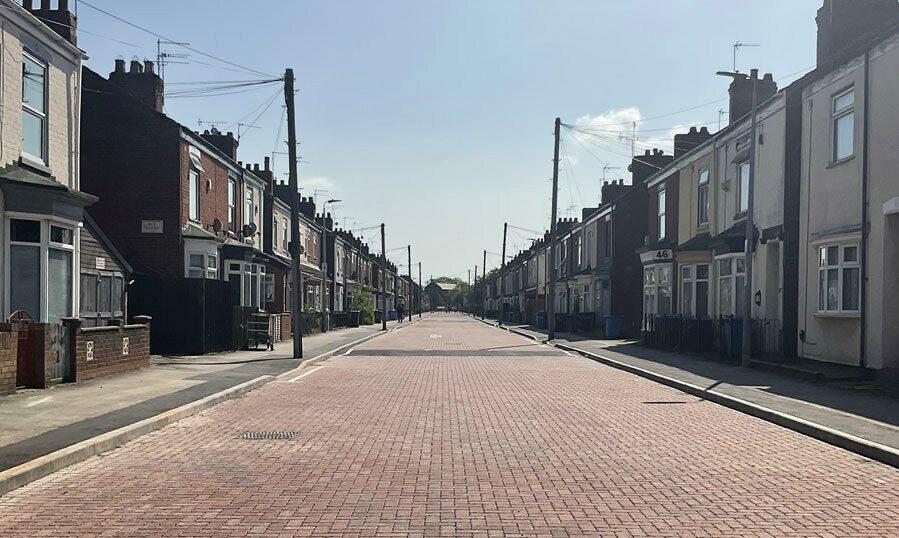
The scheme replaced the existing road surface with 3,775m² of permeable paving – specially engineered blocks with gaps between them that allow rainwater to pass through rather than run off. Underneath the surface, water is collected and its flow into the sewer system is controlled, releasing it slowly at a rate the network can manage.
At the same time, Hull City Council’s housing and energy efficiency teams installed new property frontages on Rosmead Street, improving how rainwater is conveyed from rooftops. Free water butts were also offered to households. Swift and bat boxes were installed in nearby green spaces to deliver biodiversity gains alongside the flood resilience work.
Morrison Water Services delivered the construction over six months, with paving supplied by Brett Landscaping. St John’s Community Church provided a space for regular fortnightly drop-in events throughout the works, so residents could raise concerns and stay informed at every stage.
Designed with the community
Engagement with Rosmead Street residents began in November 2021 – well over a year before construction started. In summer 2022, surveys were sent to 430 residents by post and delivered door to door. The key message was clear: residents wanted to keep their car parking while improving their street.
That feedback was central to the design. The permeable paving solution was specifically chosen because it provides flood resilience without sacrificing on-street parking – a practical, community-shaped answer to a real problem.
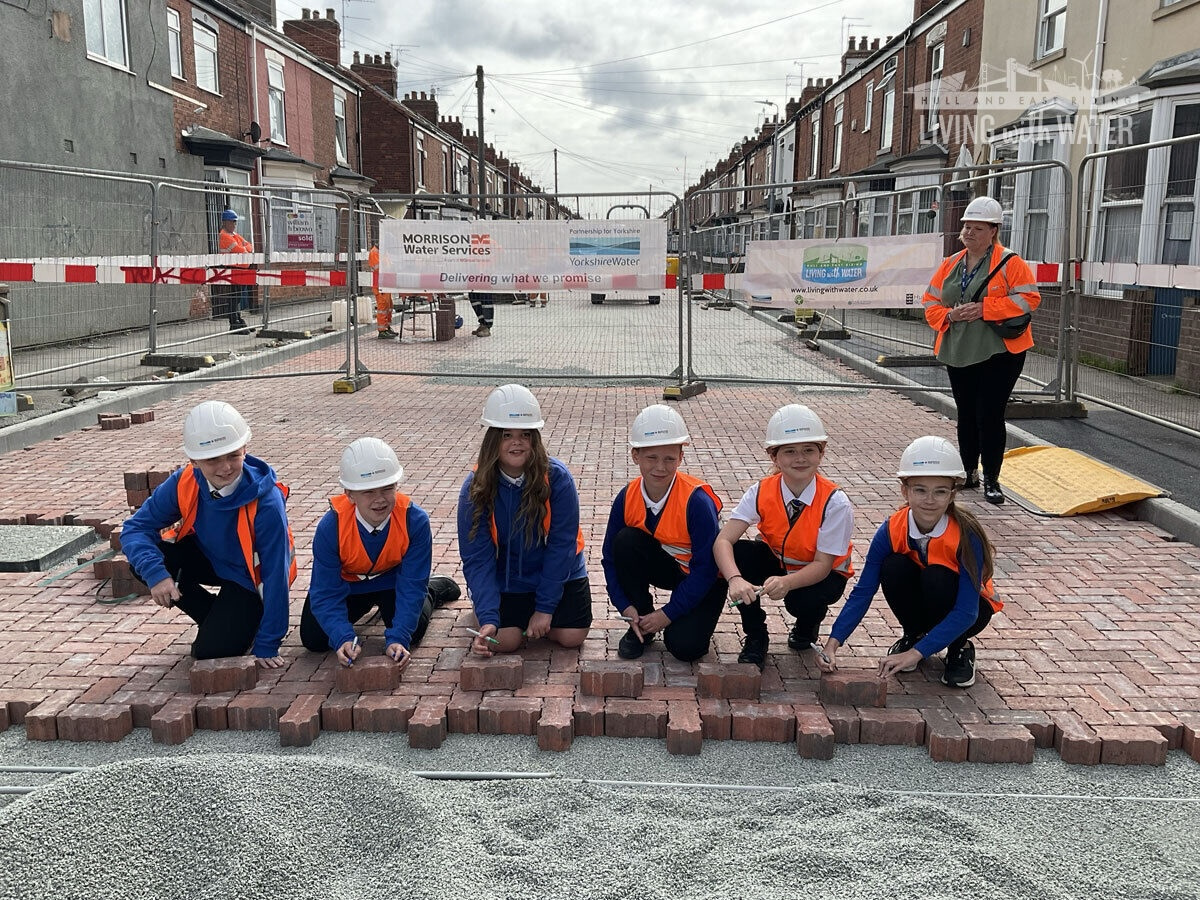
Children from nearby Estcourt Primary School were also invited to get hands-on, helping lay some of the final permeable blocks and taking part in flood resilience lessons. Their involvement made Rosmead Street not just a flood scheme, but an educational moment for the next generation.
3,775m²
of permeable paving installed
3,600m³
of water stored – equivalent to 1.44 Olympic swimming pools
430
residents surveyed during the design process 200+ properties received new frontages alongside the scheme
£0
cost to local residents – fully partnership-funded
Gallery
The Solution
What’s changed for people living on Rosmead Street
The permeable paving reduces the volume and speed of surface water entering the combined sewer network during heavy rainfall, significantly lowering the risk of flooding for homes on and around the street. A road that was once part of the problem is now part of the solution.
The scheme was recognised at the Institute of Civil Engineers Yorkshire & Humber annual awards, receiving a Certificate of Excellence in the Smeaton Award category for projects under £5 million – a testament to the quality of the engineering and the strength of the community partnership behind it.
Rosmead Street was the first scheme in a £23 million programme of surface water investment across Hull and the East Riding. It has been followed by schemes at Derringham, Bilton, Orchard Park and several local schools – and informed the design of everything that came after it.
“Rosmead Street is not only a fabulous piece of engineering, but it combines all partners working together with communities to bring surface water flood resilience into Hull.”
Mark Jones MBE, Chair, Living With Water
“This is the first project of our Blue-Green vision, which aims to increase flood resilience in the local area by managing surface water better during periods of heavy rain. We’ve engaged with the local community to understand what’s important to them and how we can work together to implement these measures in a way that works for them day-to-day.”
Lee Pitcher, General Manager, Living With Water & Head of Partnerships, Yorkshire Water